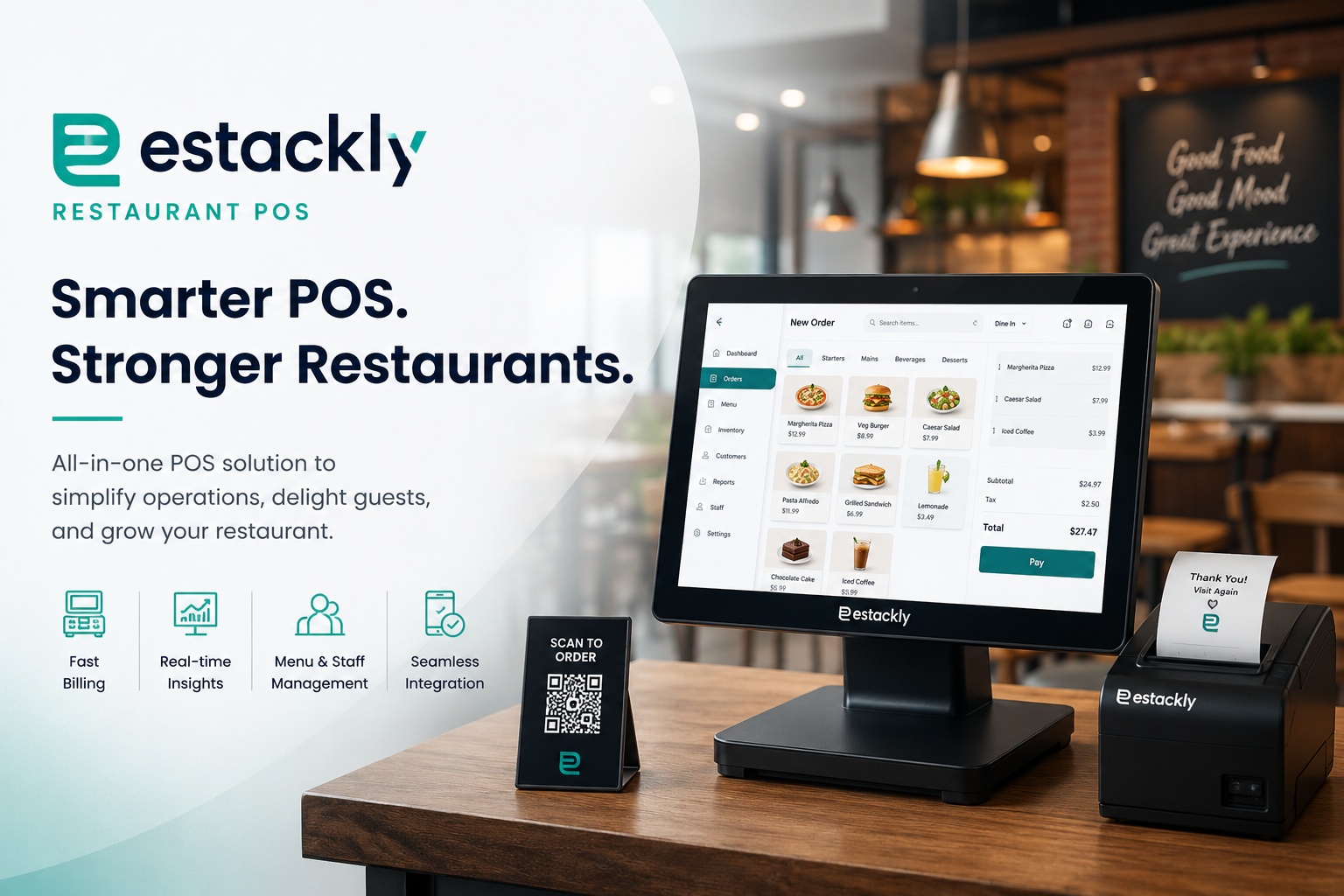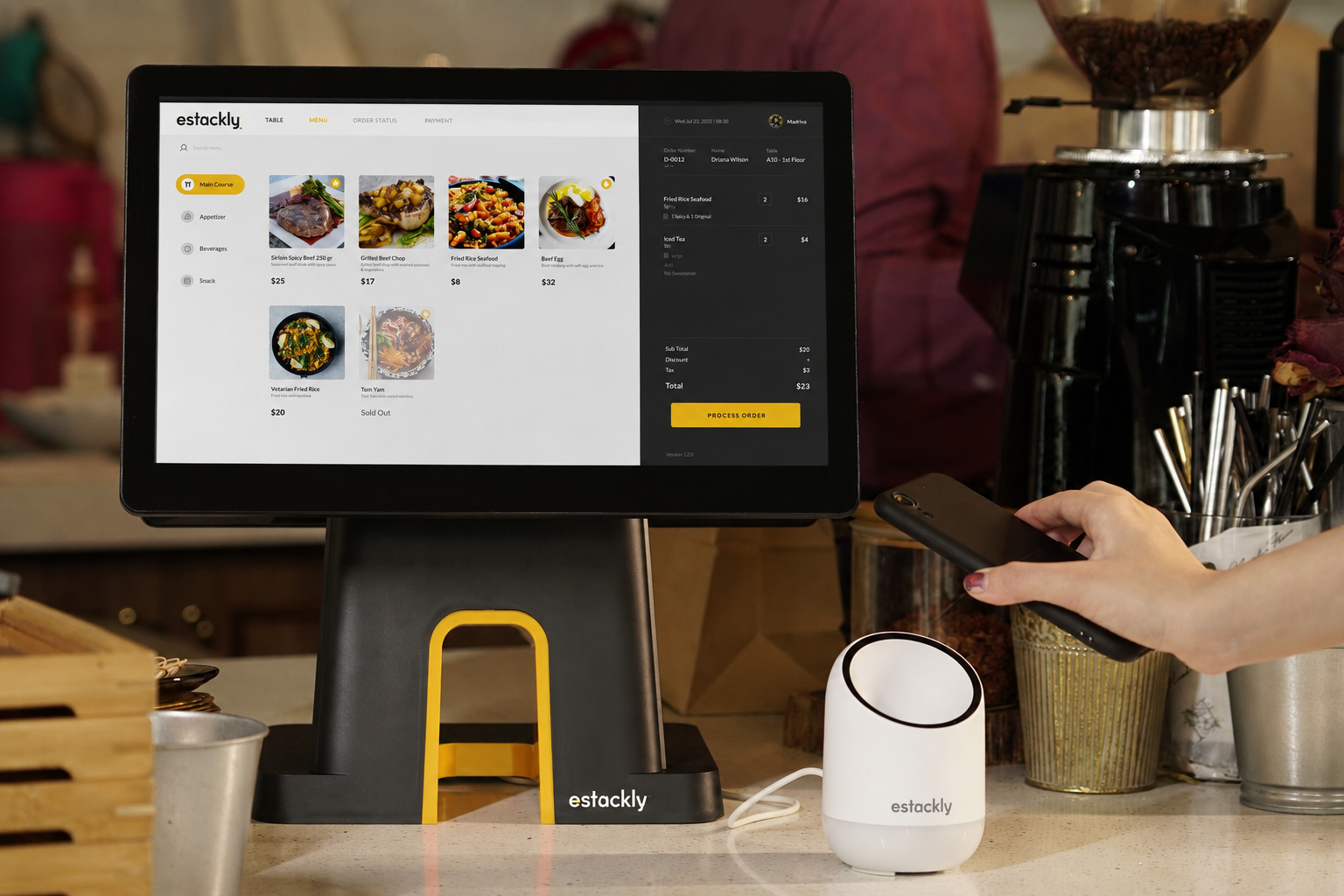
Running a successful restaurant in India requires more than great food and excellent service. Efficient operations, accurate billing, inventory control, and actionable business insights are essential for long-term growth. That's where a Restaurant Point of Sale (POS) system comes in.
Whether you own a café, cloud kitchen, fine-dining restaurant, or quick-service outlet, investing in the right POS software can streamline daily operations and improve profitability.
What Is a Restaurant POS System?
A Restaurant POS (Point of Sale) system is software that helps restaurants manage billing, orders, inventory, staff performance, and business reports from a centralized platform.
A modern POS solution typically includes:
- Fast billing and invoicing
- Order management
- Kitchen Display System (KDS) or KOT support
- Inventory tracking
- Employee management
- Customer loyalty programs
- Sales and business analytics
- GST-compliant billing
Why Choosing the Right POS System Matters
The POS system is the operational backbone of your restaurant. A well-designed solution reduces manual work, minimizes errors, and provides valuable insights that help owners make informed business decisions.
The right POS can help you:
- Speed up billing
- Improve order accuracy
- Track inventory in real time
- Reduce food wastage
- Monitor business performance
- Enhance customer satisfaction
Key Features to Look for in a Restaurant POS System
1. Fast and Simple Billing
A restaurant often serves dozens or even hundreds of customers during peak hours. Your POS should enable staff to generate bills quickly and accurately, helping reduce queues and improve table turnover.
2. Real-Time Inventory Management
Inventory tracking helps ensure ingredients are deducted automatically as orders are processed. This makes it easier to monitor stock levels, prevent shortages, and reduce unnecessary waste.
3. Kitchen Order Management
An efficient POS should instantly send orders to the kitchen through KOT or Kitchen Display Systems, minimizing communication errors and speeding up food preparation.
4. GST-Compliant Billing
Indian restaurants must comply with GST regulations. A POS that automatically applies taxes and generates compliant invoices simplifies accounting and financial reporting.
5. Employee and Shift Management
Tracking staff attendance, shifts, and performance from a single dashboard helps restaurant owners improve productivity and accountability.
6. Reporting and Business Analytics
Detailed reports on sales trends, peak hours, top-selling dishes, and inventory usage empower owners to make data-driven decisions about pricing, staffing, and menu planning.
7. Multi-Outlet Management
If you operate more than one location, choose a POS that allows centralized control of menus, inventory, and reports across all branches.
How to Choose the Best POS Software in India
Before investing in a POS solution, ask yourself:
- Is it easy for my staff to learn and use?
- Can it scale as my business grows?
- Does it provide detailed reports and analytics?
- Does it simplify inventory and kitchen management?
- Does it offer reliable customer support?
For restaurants looking for a cloud-based solution with features like fast billing, inventory management, GST-ready invoicing, kitchen order processing, and business reporting, platforms like Estackly Restaurant POS are worth considering. You can explore its features and pricing here: https://estackly.com/restaurant-pos.
Common Mistakes to Avoid
Many restaurant owners make the mistake of selecting software based only on price. Instead, evaluate the overall value it brings to your business.
Avoid:
- Choosing a system that's difficult to use
- Ignoring inventory management capabilities
- Overlooking reporting and analytics
- Buying software that cannot scale with your business
- Skipping staff training after implementation
Benefits of Using the Right Restaurant POS
A modern POS system can help restaurants achieve:
- Faster billing and smoother operations
- Better inventory control
- Reduced food waste
- Improved order accuracy
- Enhanced staff productivity
- Data-driven business decisions
- Higher customer satisfaction
- Increased profitability